It's time to befriend your brain | Executive Function workshop
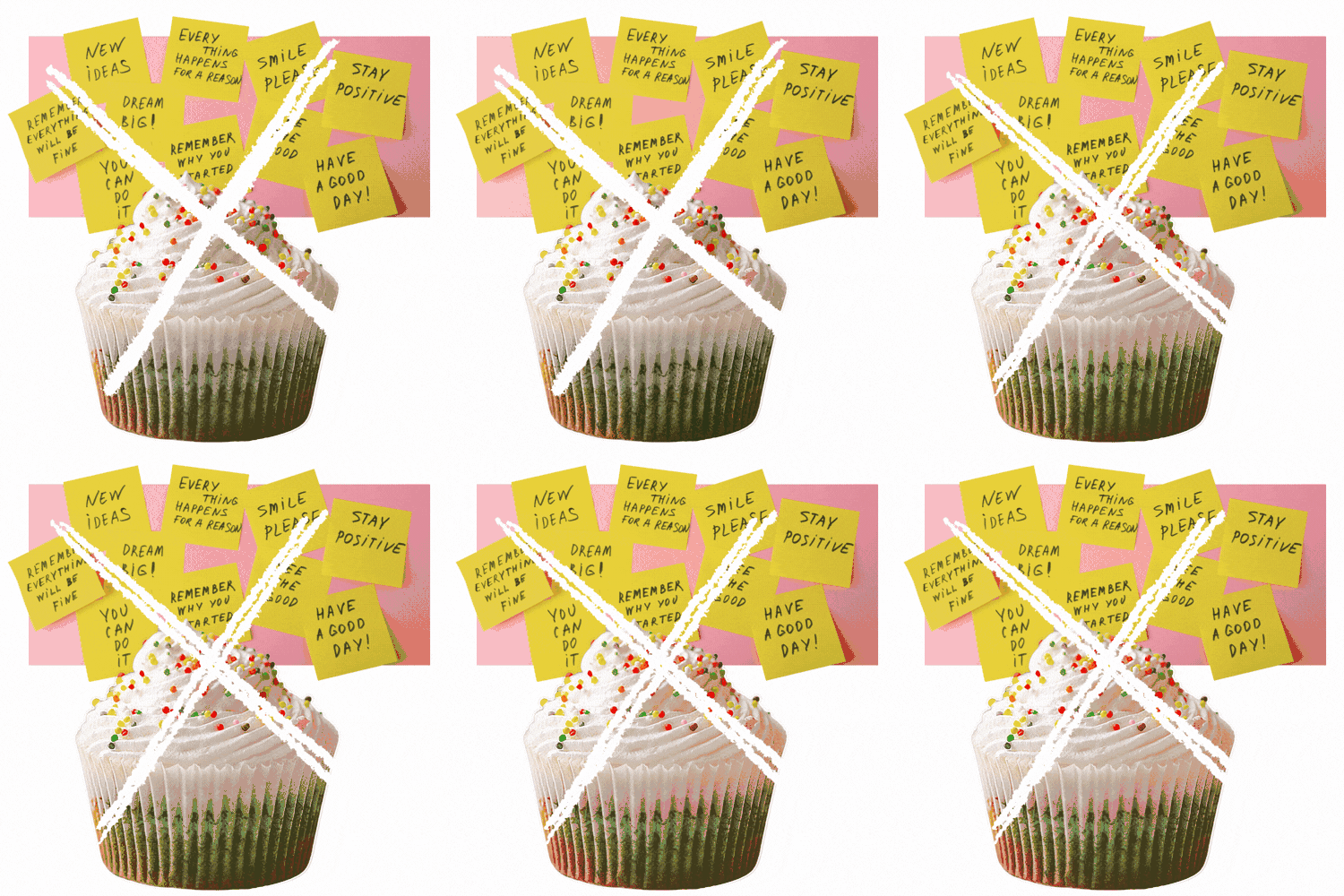
It is nerdy as all get out, but the life-changing route to self-compassion is not the temporary treat or sticky note affirmations.
It is metacognition.
Truly understanding how you tick, with detailed and constructive language, is what:
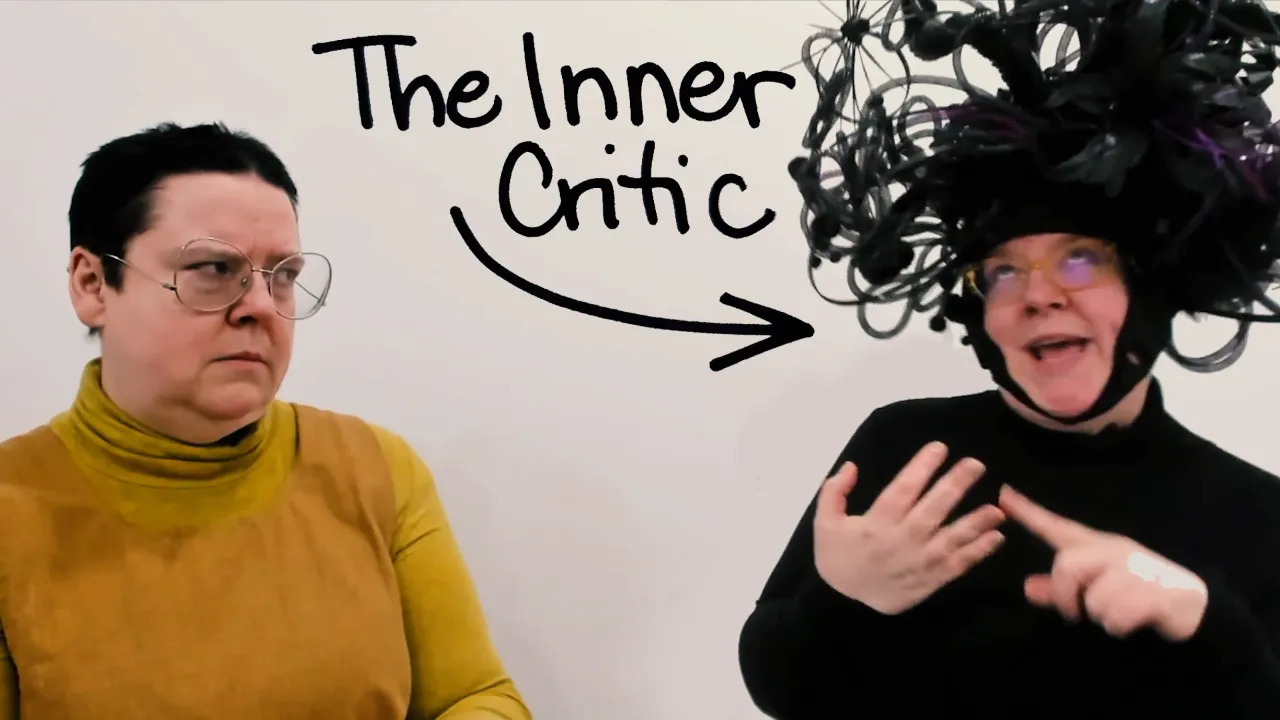
- Shushes that yappy inner critic.
- Points you to the specific resources you need to manage the challenges and boost your strengths.
- Rewires your long-term relationship with yourself.
Not how your parent or spouse ticks.
Not how you think you are supposed to tick.
Understanding and accepting how your brain actually works, and doesn't work so well, makes lasting positive change.
This is why I created Befriend Your Brain: Executive Function and Visual Thinking.

Let me show you how this course works, and I'll use myself as a guinea pig with the executive function I fight with most.
6 reasons why this executive function course works:
One clean set of executive functions.
Maybe you (or your kiddo) has gotten an executive dysfunction diagnosis, or you're tripped up on the midlife hormonal and mental rug pull.
Have you tried to answer "What is executive function" only to face scattered, contradictory lists floating around out there?
Yeah, me too.
I was boggled by how little consistency there was in the literature. And trying to synthesize info with poor executive function?
Extra mean.
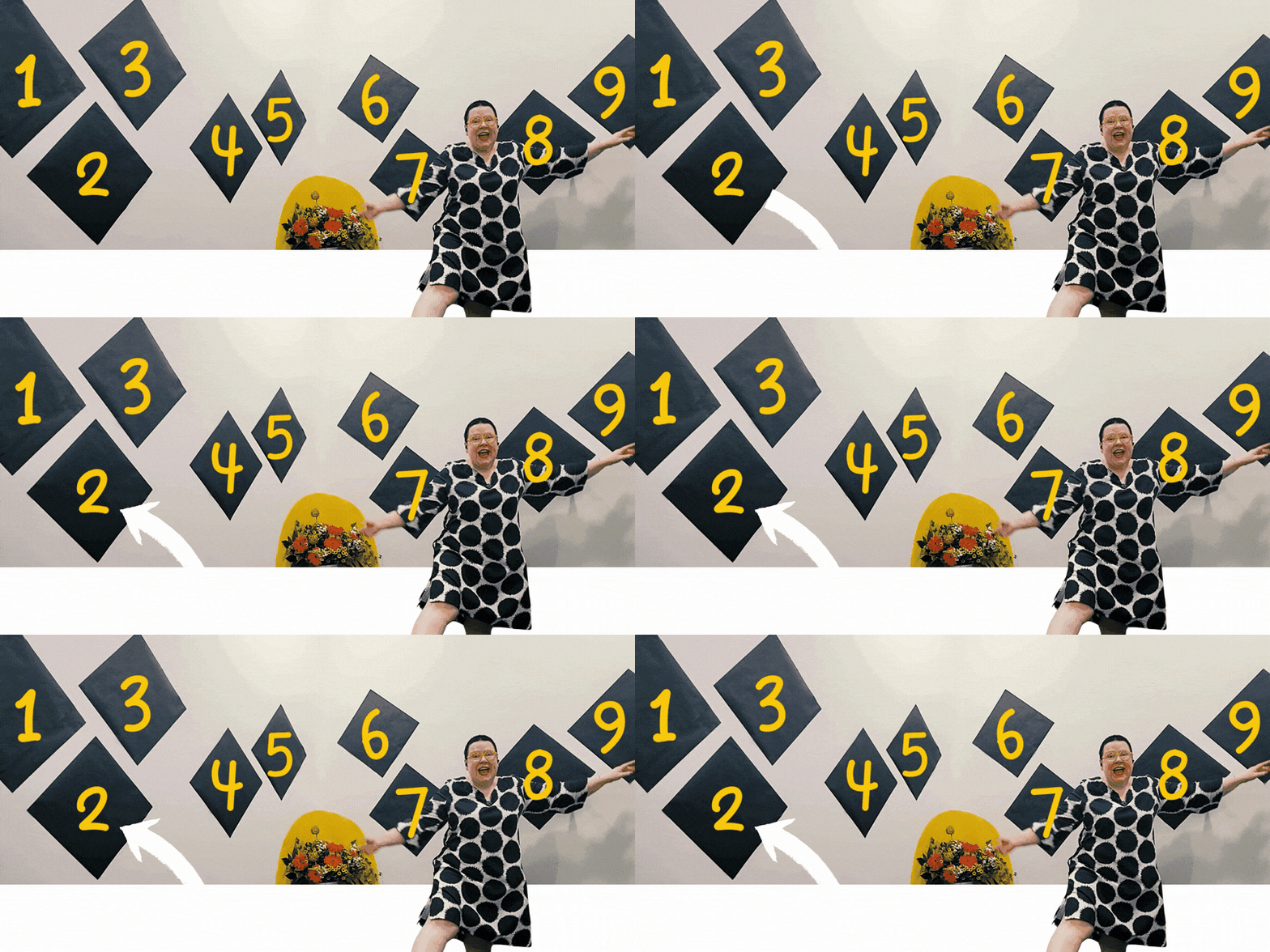
Those 9 squares in the video?
They represent the clear set of 9 executive functions that came out of months of sleeves-rolled-up research as a layperson looking for relief.
Let's zoom in on the second square.
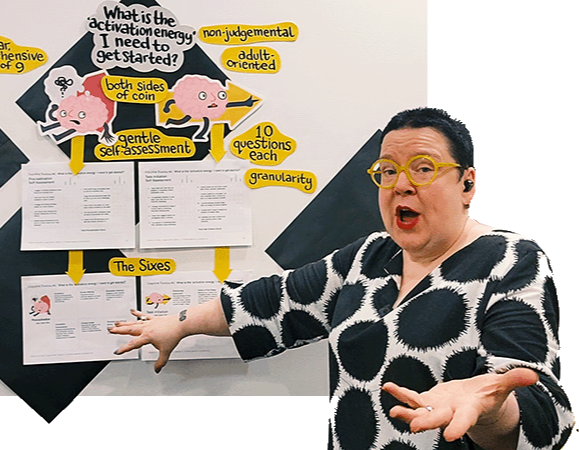
Non-judgmental language.
Every executive function begins with a core question. One you can actually answer.
For the second square it is —
What is the activation energy I need to get started?
That question does two deliberate things:
- It's non-judgmental.
Heaven knows, the inner critic is already loud enough — so we stay with a plain, observational question instead of piling on. - It's built for grown-ups.
There's a whole lot of executive function material out there for the kiddos. This is for us adults, just trying to adult, day to day.
Personally? I need a stupid amount of activation energy to get going.
Once I do, I'm unstoppable.
But getting going is exactly where I lose the fight, and my biggest challenge there is procrastination.
I know I'm not alone.
Get ready for the gamechanger.
Both sides of the coin.
Plenty of us know our dysfunctions cold. We can list what's wrong with us all day.
What most of us are missing is the vocabulary for what we want instead.
Naming the function gives you the language for what you're working toward, and something to build your skills to support.
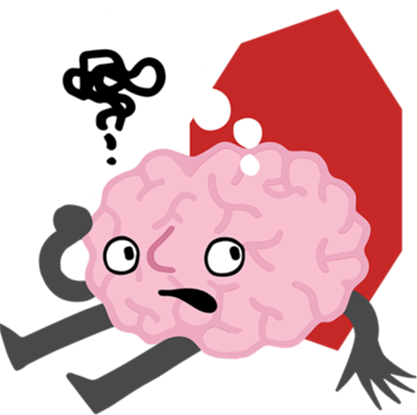
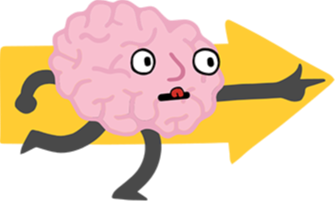
Procrastination is the dysfunction.
Familiar foe to many of us.
Its function — the thing we actually want — is task initiation.
A gentle self-assessment.
For each one of the nine executive functions we play the best game of 20 questions ever.
A 10-question assessment for the dysfunction, and another 10 for the function.
Designed to be observational and non-judgmental, same as the core question.
In a few minutes, you answer each one for yourself and mark it rarely, occasionally, or often.
On the procrastination side:
"I begin with low-importance tasks first to ramp up to the more challenging ones."
I can mark that one 'often.' I am the Queen of Productive Procrastination.
On the task initiation side:
"I establish and follow routines that make starting common tasks automatic."
Also an 'often' for me.
That shows me I'm not a hopeless, terrible procrastinator. I am someone who struggles with procrastination who has both useful (get-my-butt-in-gear routines) and distracting (that way more interesting "warm up").
So in the same breath, you see where your wins are and where your challenges are, all at a level of detail you can actually use.
See how all this beautiful granularity is building up?
Real detail, without judgment, about how this executive function actually shows up in your life.
The Sixes
The next layer is what I call 'The Sixes.' Why that name?
I could fit six descriptions on each page.
Clearly a non-exhaustive list, just meant to begin defining what is behind each function and dysfunction.
How one shows up for you may be nothing like how it shows up for me.
For me, Unrealistic Expectations drive a lot of my procrastination. Usually a cocktail of underestimating time (see EF8) and wanting everything to fit into some elegant, Grand System.
But when I get to last one — Overplanning Without Action — I watch the light bulbs go off over in the Zoom gallery.
This is the expectation that one must figure absolutely everything out at the starting gate, before they'll step onto square two.
That's not my personal 'flavor' of procrastination. But it is one of half a dozen ways each function and dysfunction can show up.
Again, more detail to understand and accept ourselves.
And lastly, the part that makes Befriend Your Brain unlike any other executive dysfunction resources out there.
The visual tools
We end every coin — every function and dysfunction pair — with the visual tools that support it.
This is where I get to nerd out, after decades of getting stuff out of my head and into my hands.
Examples from Executive Function 2:
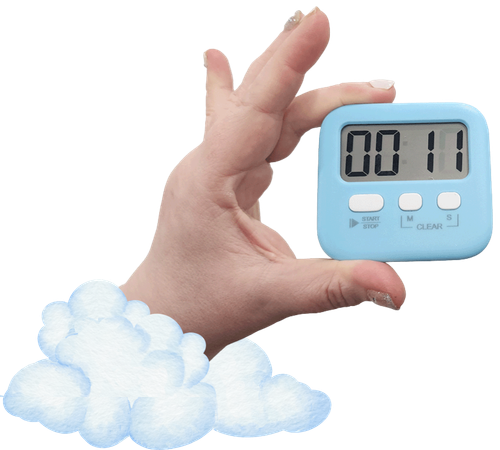
My super fancy $6 procrastination buster: a digital timer, started and parked in my visual periphery. Seeing the numbers tick away keeps me monotasking.
Or one of the best task initiation tools going — a good old checklist.
Doesn't have to be one of those little plastic jobbies.
Any checklist takes your common, repetitive tasks and makes them automatic, pulling the cognitive load out of your head.
Make the checklist, use the checklist, make things easier on yourself again and again and again.
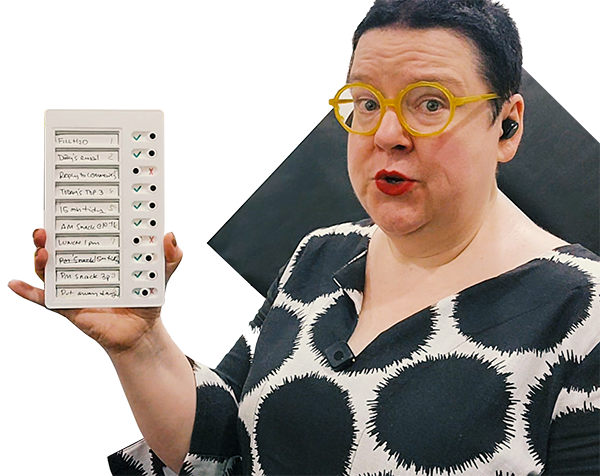
And that's a sneak peek at just ONE square.
All nine executive functions are bundled into your big, chunky Befriend Your Brain resource guide — every self-assessment, all of The Sixes, an index of every visual tool I share.
Sparkly binder not included; you choose your own.
If you're an overthinker worn out by your own inner critic, this is what it feels like to befriend your brain instead. Come meet the other eight.
Video Transcript | Click to expand
Suggested Posts + Pages
Click on a card to explore more: