The Complete Visual Thinking System | Full Course Tour
Watch this video to:
- Get to know The Agerbeck Method, a self-paced, video-based online course on visual thinking
- Learn the 9 elements of visual thinking that make up the 9 modules of the course
- See how easy it is to navigate the course with a sneak peek beyond the login
Video Transcript | Click to expand or keep reading article version
You know visual thinking would change how you work:
- Get your thinking out on paper.
- Capture concepts clearly.
- Stop losing track of what matters in meetings or conversations.
- Quiet the racing thoughts in your head.
What's holding you back?
First, you may think visual thinking is an innate talent.
No, visual thinking is a learnable skill.
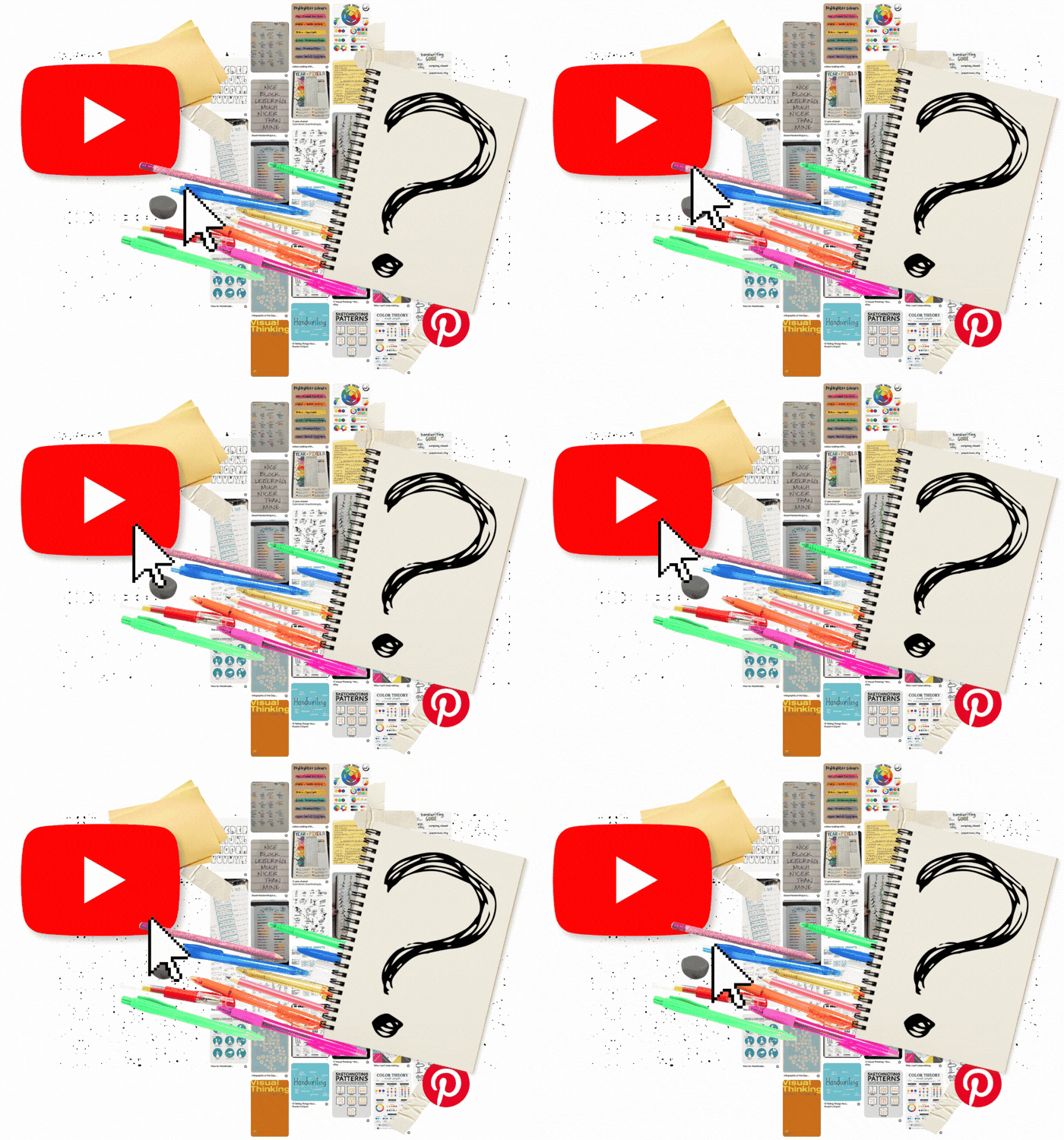
Second, if you've been trying to learn visual thinking, you're very likely cobbling together visual thinking tips from all sorts of places.
Blog posts, scattered YouTube videos or making Pinterest boards that inspire but do not instruct.
That is a distraction-filled time suck.
Your busy brain deserves a complete path, not a scavenger hunt.
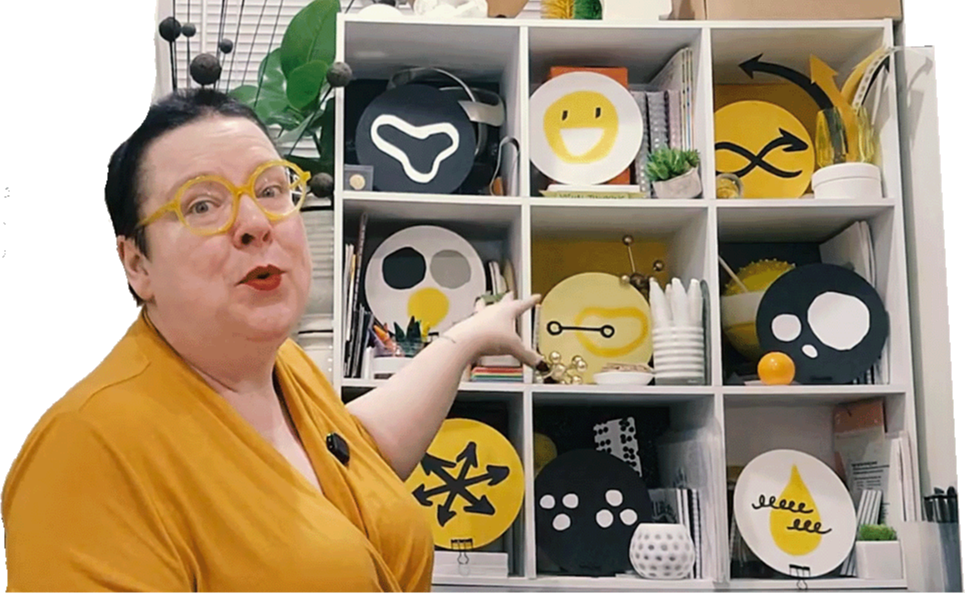
Let me introduce you to The Agerbeck Method.
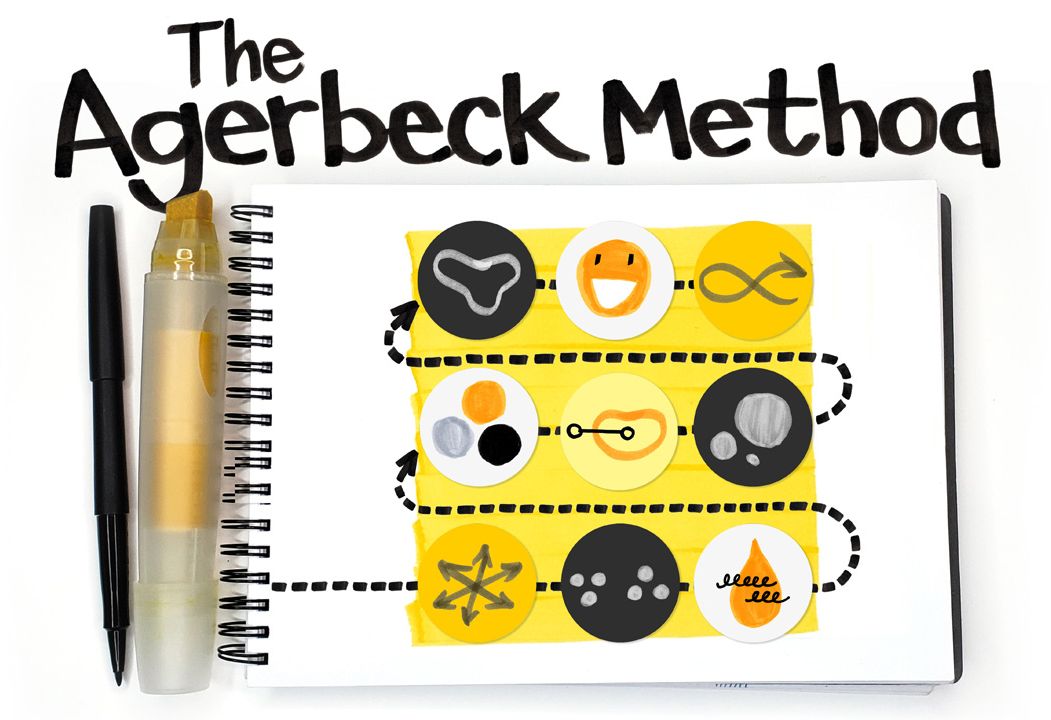
All right, it may look like a bookcase...
But this three by three grid reflects the structure of the comprehensive course.
Each of the nine modules laid out exactly like this.

I'm Brandy Agerbeck. I've spent nearly 30 years helping people make the intangible, tangible and the complex clear. From supporting corporate clients to teaching individuals all about visual thinking and executive function to needing these tools for my own squirrely brain, I have demystified visual thinking — this special kind of drawing.
It isn't about talent or being artistic. It's about mechanics, learnable, repeatable mechanics.
Let me show you more.
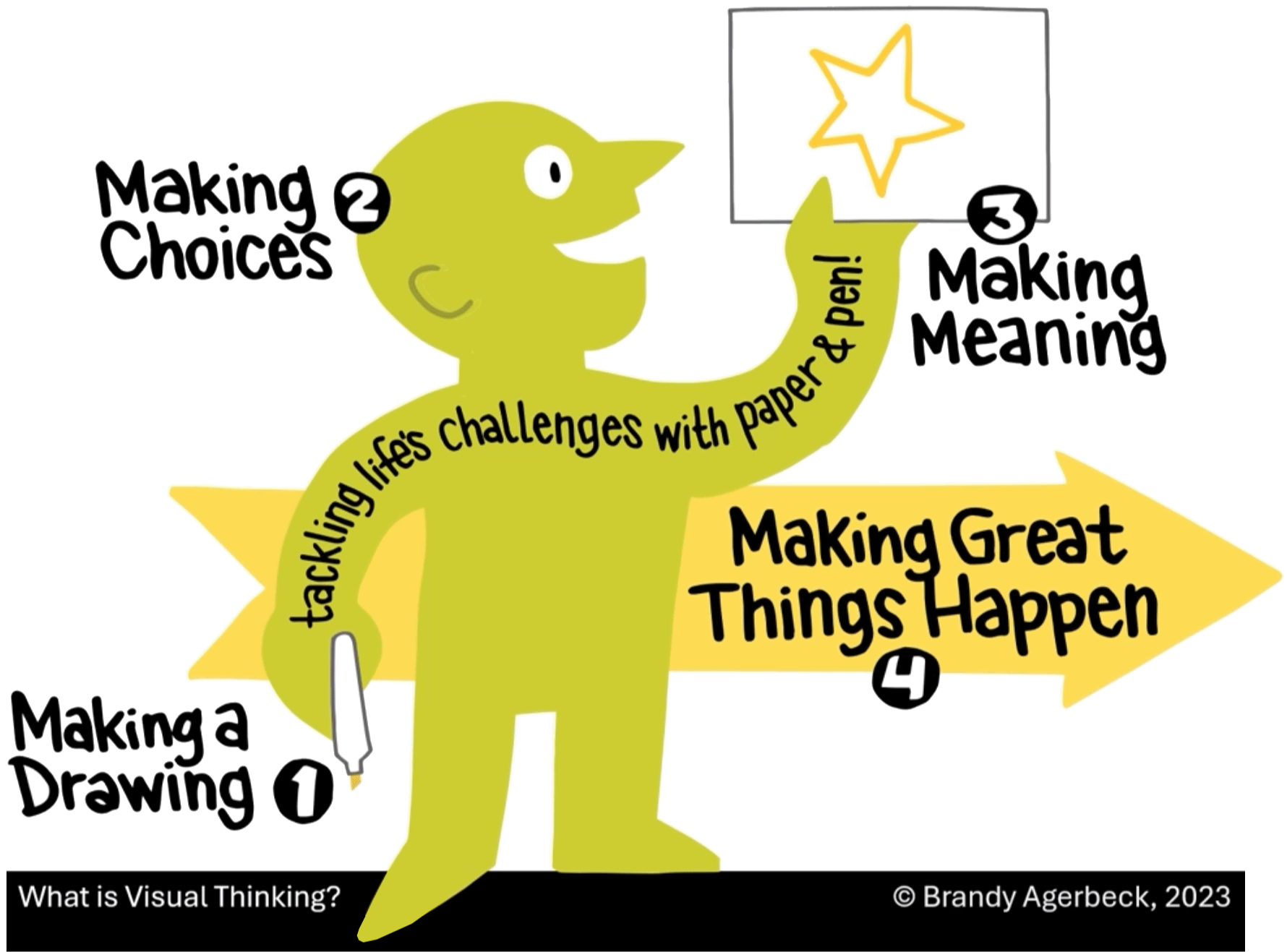
What Is Visual Thinking?
Visual Thinking is tackling life's challenges with paper and pen.
You are making a drawing, a physical, tangible drawing.
In contrast to writing out our thoughts and ideas, drawing makes us make more choices. Not just what are the right words to capture my point, but how big is this point? Is it a certain color? How does it fit in or connect to other points already on the page?
With all these additional choices you are making meaning for yourself, spotting patterns and making connections you would not have made with words alone, truly organizing your thinking.
Lastly, these drawings are your map to make great things happen. That great thing may be very temporary, like dumping out all your thoughts on the page to help you reduce overwhelm, get unstuck and ground yourself, or it could be the map for an amazing long term project.
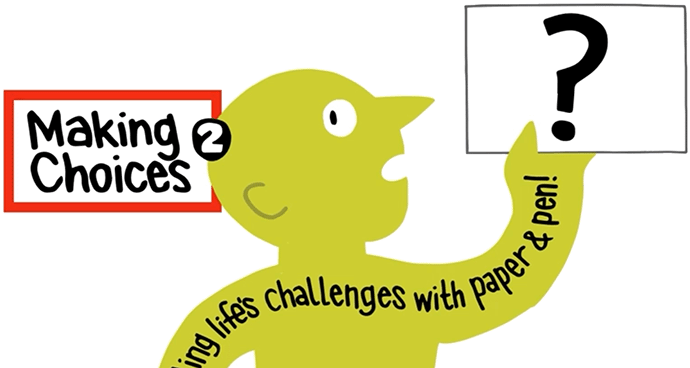
The Core Problem
But what keeps us from making drawings that are full of meaning?
👈 It's this right here.
This is why learning visual thinking feels so hard.
If you don't know your choices, you can't make them deliberately. You're winging it every single time, and you will see the gap between the thoughts in your head and how you capture them on paper.
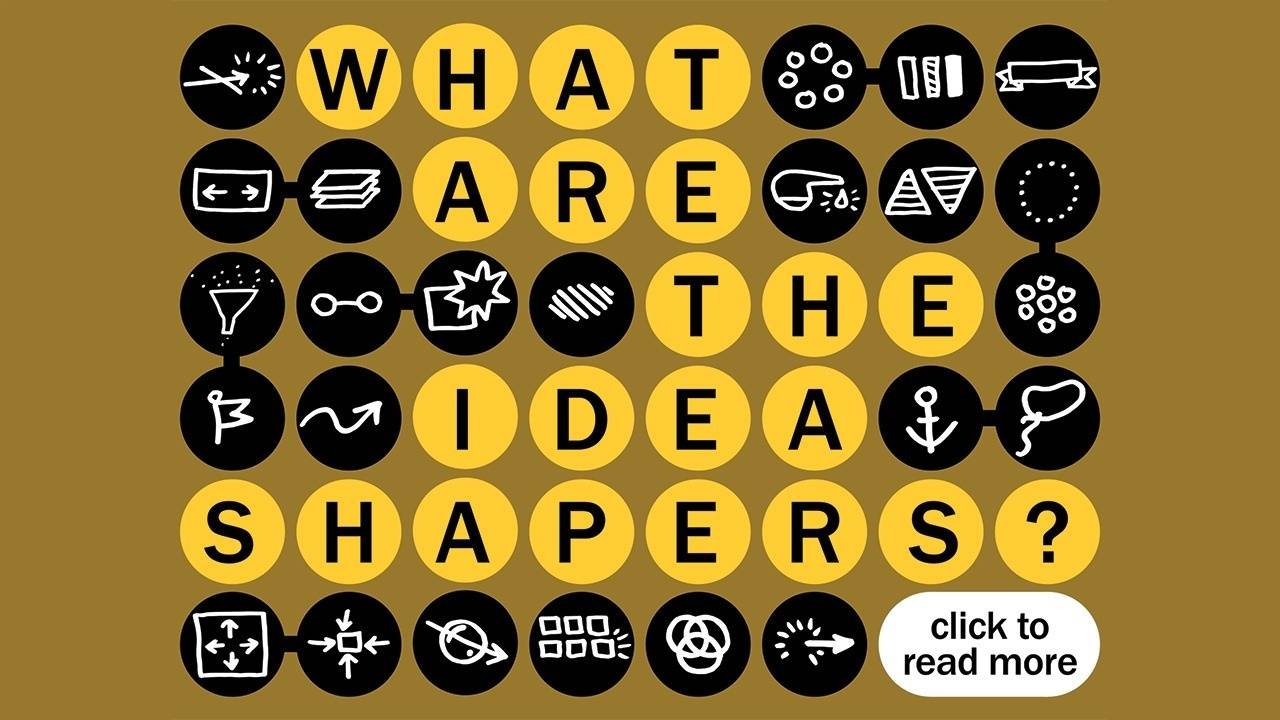
Enter: The 24 Idea Shapers
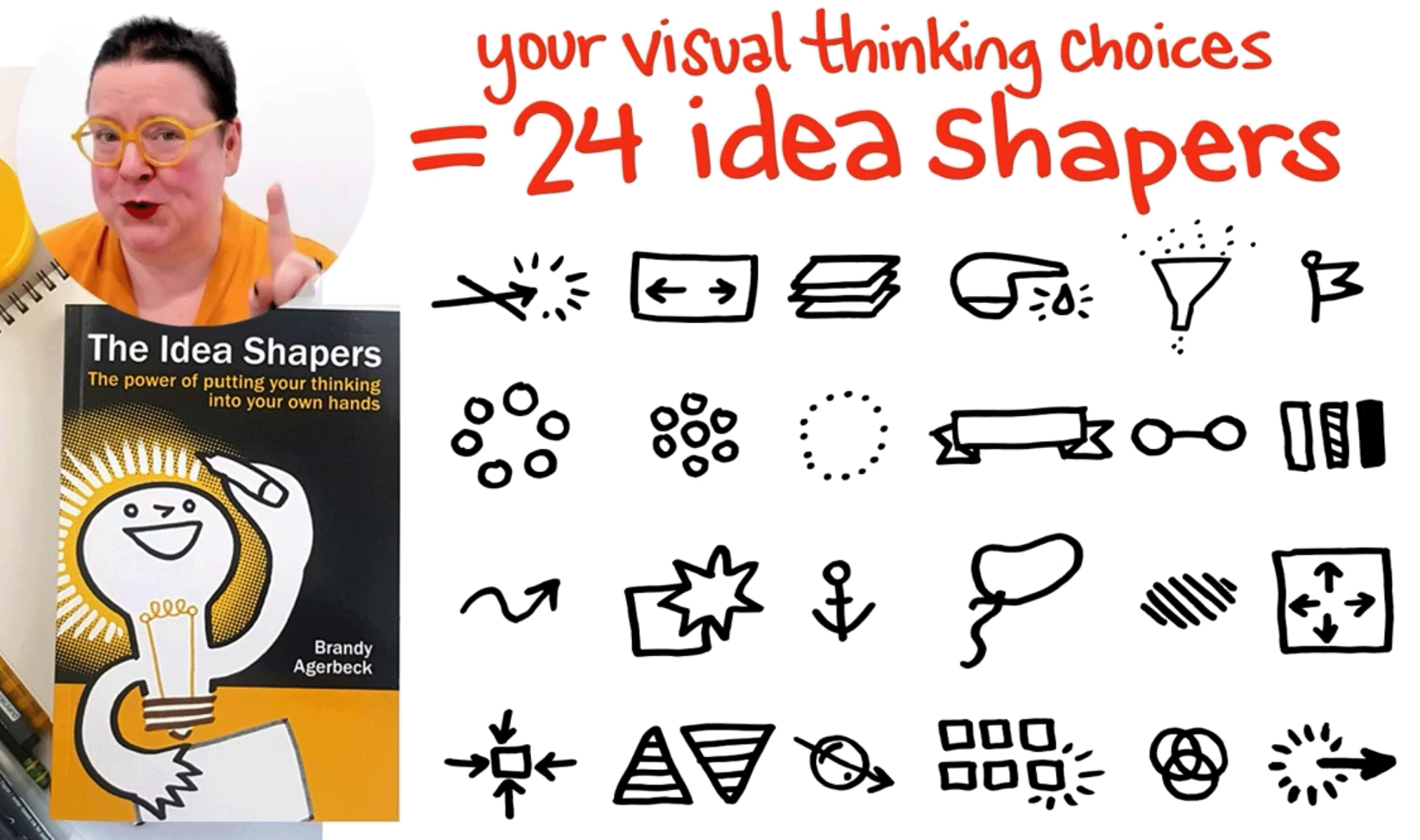
Each one of these symbols represents one concrete, repeatable visual thinking technique, one idea shaper.

For example, here is the symbol for the Stack, the third idea shaper.
This is all about making your thinking modular, taking each point, giving it its own index card or sticky note to help you move around your thoughts and sort them out.
You can learn all 24 idea shapers in the book of the same name, but the course turns reading into doing.
In every video, you watch me use each technique, practice alongside of me, and then put it into practice on something you are actually working on.
What makes learning visual thinking so easy?
Structure of The Agerbeck Method
Let me share the course structure that makes mastering visual thinking not only straightforward, but joyful.
Each of these 9 circles is one module, teaching you one element of visual thinking.
The first module here in the lower left hand corner is CANVAS. What you draw on and what you draw with, and how that helps you meet your particular visual thinking objective.
Every module has the exact same structure:
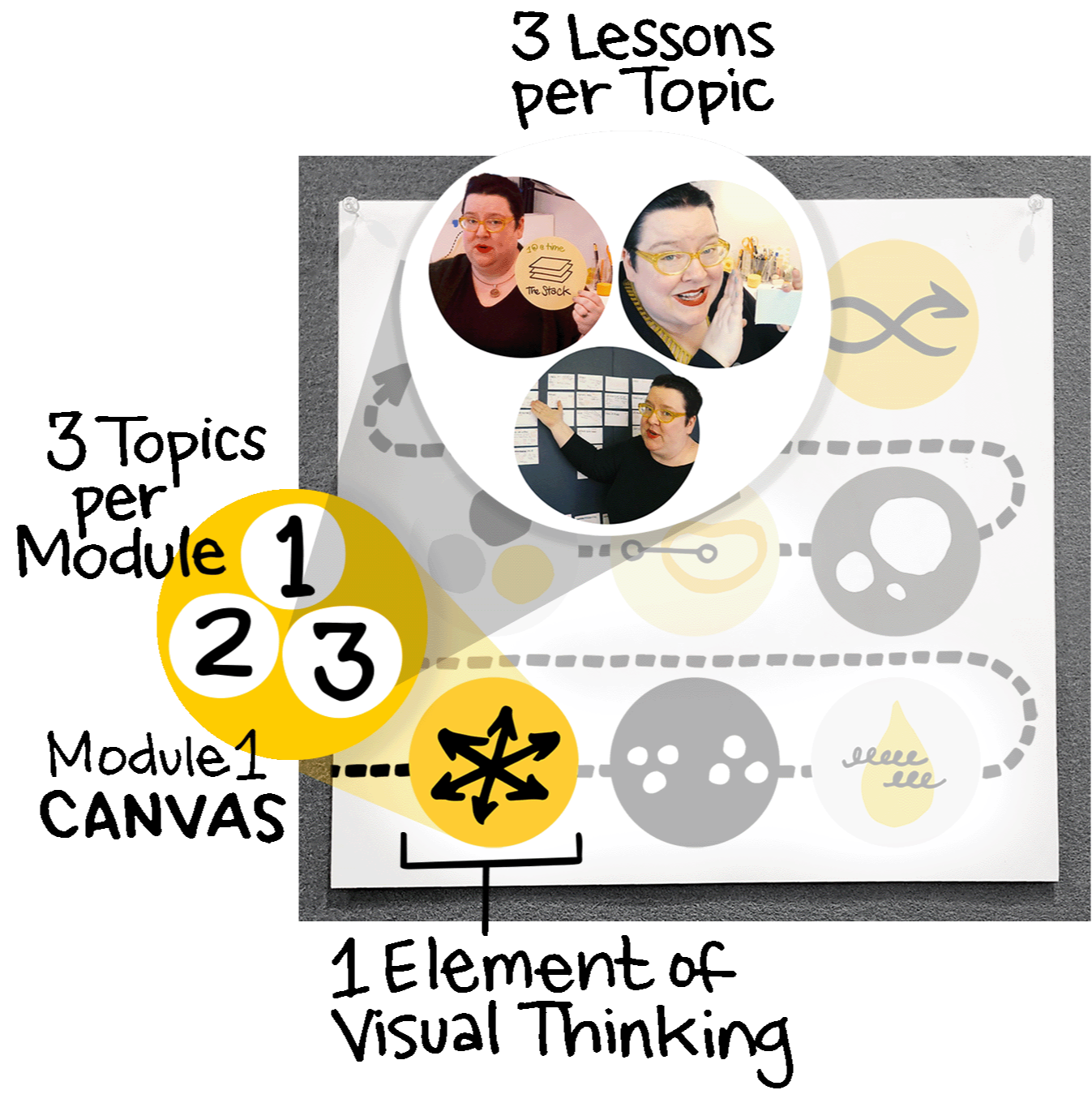
- Each module has 3 topics
For example, the third topic is The Stack, mentioned above. - Every topic has 3 lessons
Over the course of three video lessons, you will learn everything you need to know about The Stack. - Every 10th lesson is a review and reflection session.
We recap all nine lessons, and you can do a gentle self assessment.
Notice exactly where you are in your visual thinking practice in that moment at the end of each module.
The Result?
No more distraction, rabbit holes, conflicting advice, or cobbling together resources.
You will have a crystal clear path. One bite-sized lesson at a time. Log in and click on your next lesson.

Your path to lifelong visual thinking
You've seen the structure of one module. Let's look at how all 9 modules build on each other.
We start out with very simple concepts and build up to more and more sophisticated visual thinking.
Jump to 5:15 in the video above for a peek into the course.
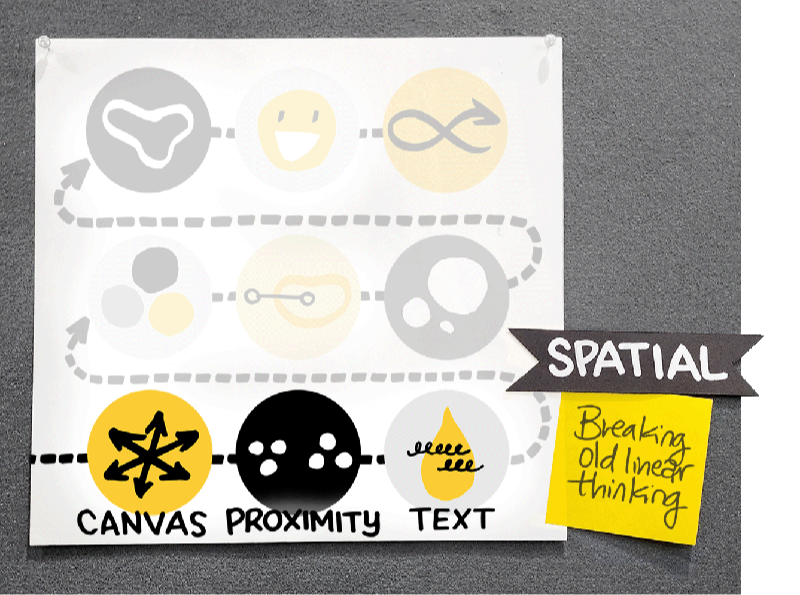
Row 1 | Making Your Thinking Spatial
After CANVAS, the second module is about PROXIMITY. Where do you place your ideas within your drawings, and how do your ideas fit together?
Module three is about TEXT. First, about distilling text, how to be more succinct in what you want to capture, and all those beautiful choices on how you write out the words that are within your drawings.
Now these first three modules are all about making your thinking spatial, breaking old linear thinking patterns, so we can fit our ideas together in new ways.
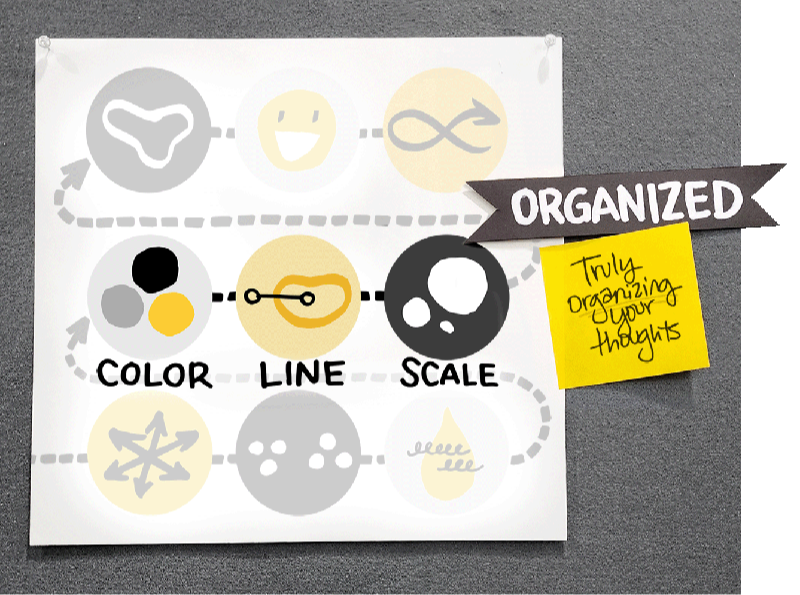
Row 2 | Organizing Your Thinking
Next, Module Four is all about COLOR, choosing colors to make meaning within your drawings.
Our middle module, Module Five, is all about the power of very simple LINES, drawing lines between ideas to connect them. Draw lines around ideas to contain them. So much we can do with simple, simple lines.
But Module Six, oh boy!
This is all about SCALE and hierarchy, making the big ideas big, the supporting ideas small, and creating levels of information within our drawings.
These three modules are all about making your drawings, your thinking, organized, showing all the different kinds of relationships between the ideas within the drawings.
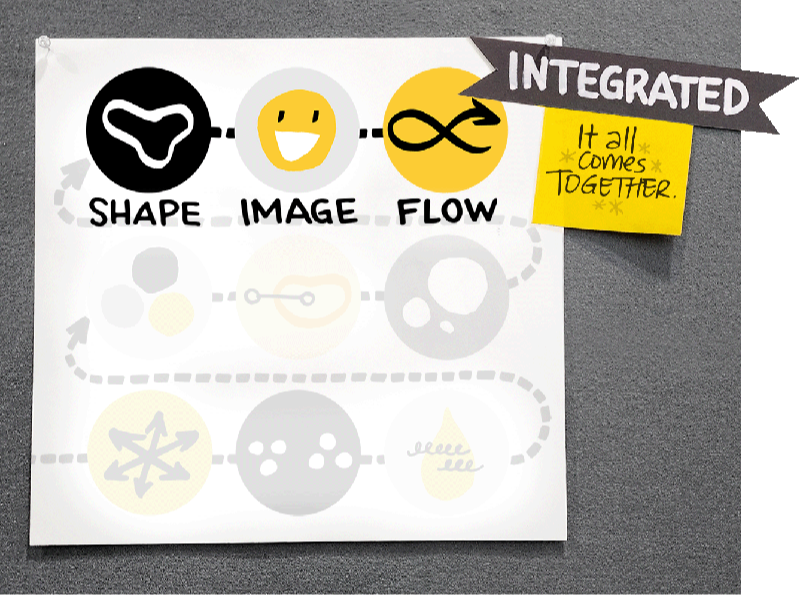
Row 3 | Integrating Your Thinking
Module seven is about SHAPE, looking at your drawing as a whole composition, and how do the pieces fit together?
Now in module eight, we talk about icons. We talk about IMAGE, and how pictorial imagery sits beside all the non-pictorial visual thinking choices you're making.
And lastly, FLOW. Our ninth module is first about creating more direction and navigation within your drawings, but we end on finding your flow and keeping your flow in your lifelong visual thinking practice.
And these three modules are all about making your drawings more integrated.
This is where everything comes together.
That's the full tour. You've seen the system: self-paced and structured.

No more distracting, piecemeal, time suck learning.

No more disconnect between what is in your head and how you organize it on paper.
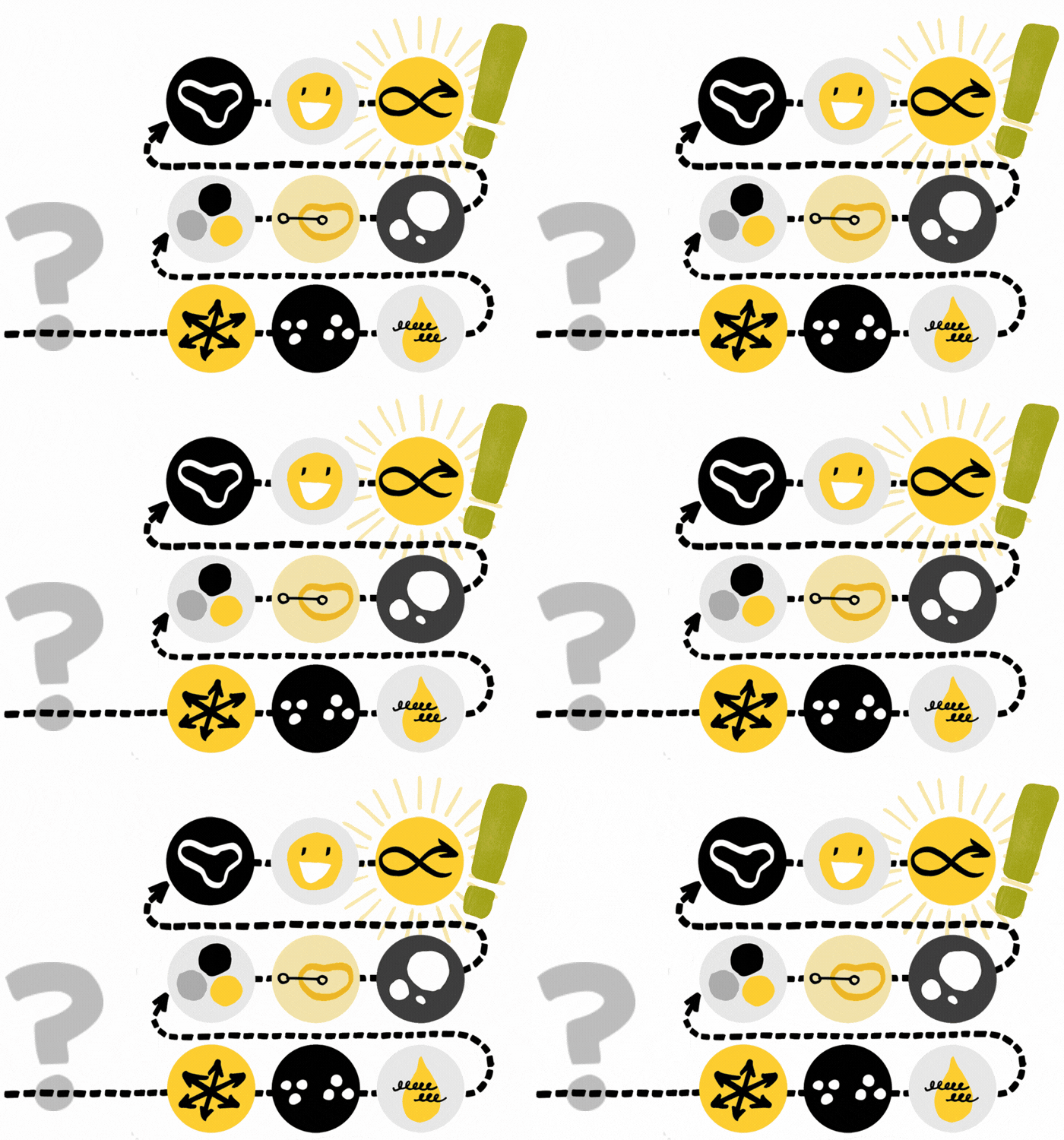
These are the nine modules that teach you the 24 idea shapers that take you from not knowing your visual thinking choices to making them deliberately, every single time.
The Agerbeck Method teaches you the mechanics, the practice, and your busy brain deserves this clear, complete system where all you need to do is log in and press play on the very next lesson.
Suggested Posts + Pages
Click on a card to explore more: